16 hours at the district police department
Next to me stood a guy whose wrist was so swollen that you could see with the naked eye it was broken. There was also a man nearby with a lacerated shoulder.
They accused us of betraying our homeland and of being paid: 150 euros, 150 dollars, they named different sums. They asked who had been born after '94. A couple of guys answered, and they said: "You never even saw the '94 Constitution, so why do you want it?" "We have a good country, and you've already smashed up half the city today." Every so often they beat the guys who turned around with batons. The swearing was off the charts.
They started making an inventory of our belongings. I tried to be last. Maybe that wasn't very nice of me, but I understood right away that even if they beat us, it wouldn't be as bad for me as for the first one.
In front of the steps at the entrance to the inner courtyard they had set up school desks, where policewomen sat and listed the detainees' belongings. I asked a district police department (RUVD) officer, Svetlana Nikitina, to inform the Israeli embassy of my detention, and she rudely refused. I also asked to keep my face mask against the coronavirus. After a few seconds' thought she refused that too, which put me at risk of catching the coronavirus.
I was lucky: I had arrived a couple of days earlier, and my whole wallet was in foreign currency. By the rules they have to list every banknote. In principle they could have made me out to be the puppet master, but I'm not a Pole, and I guess that stopped them. They spent half an hour listing my things. Everyone else was standing in the same position at another fence, and I got to rest. But during that time I saw a lot.
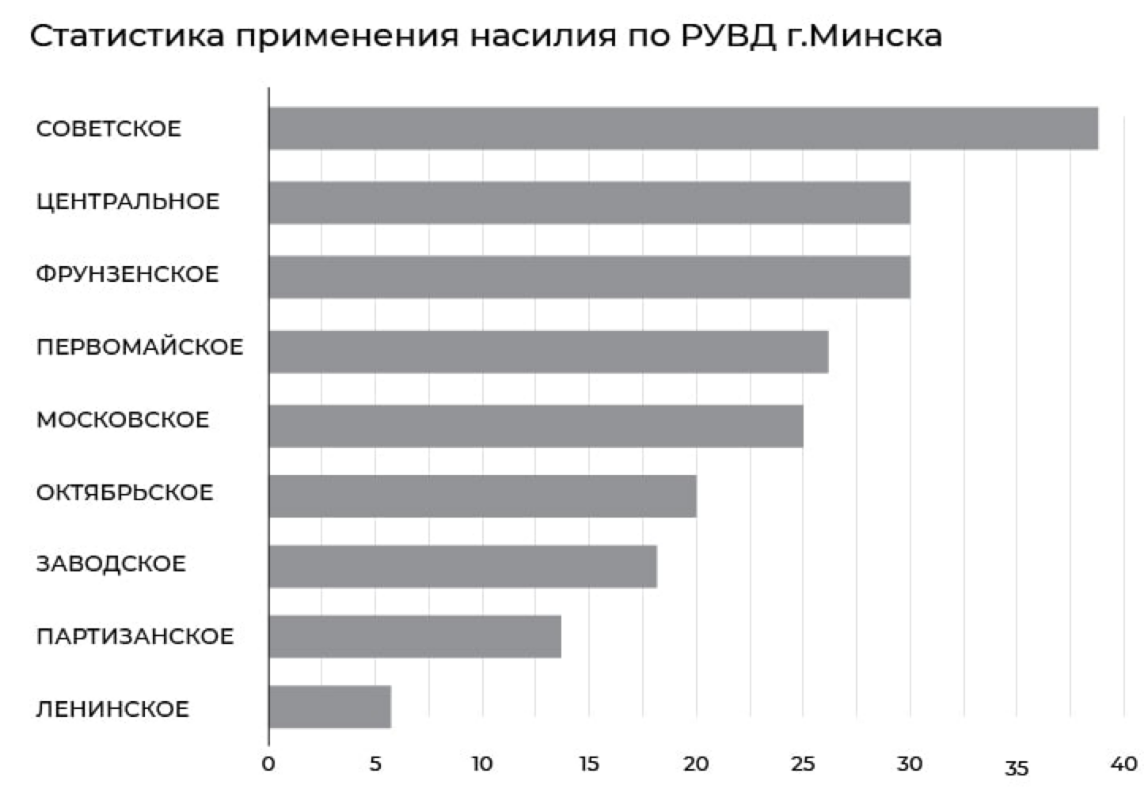
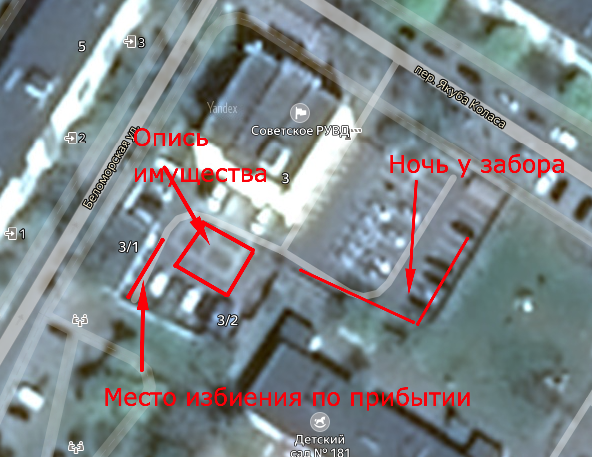 The Sovetsky district police department in Minsk
Two of the top-ranking officers at the RUVD were the only ones without masks. One of them was even wearing a smart white shirt. He walked up to the guy with the broken wrist, grabbed his arm right at the fracture, slammed it against the fence as hard as he could and shouted: "Hands above your head!" Later several witnesses found and identified this officer as Lieutenant Colonel Timur Borisovich Kessel, deputy chief of the Sovetsky district police department.
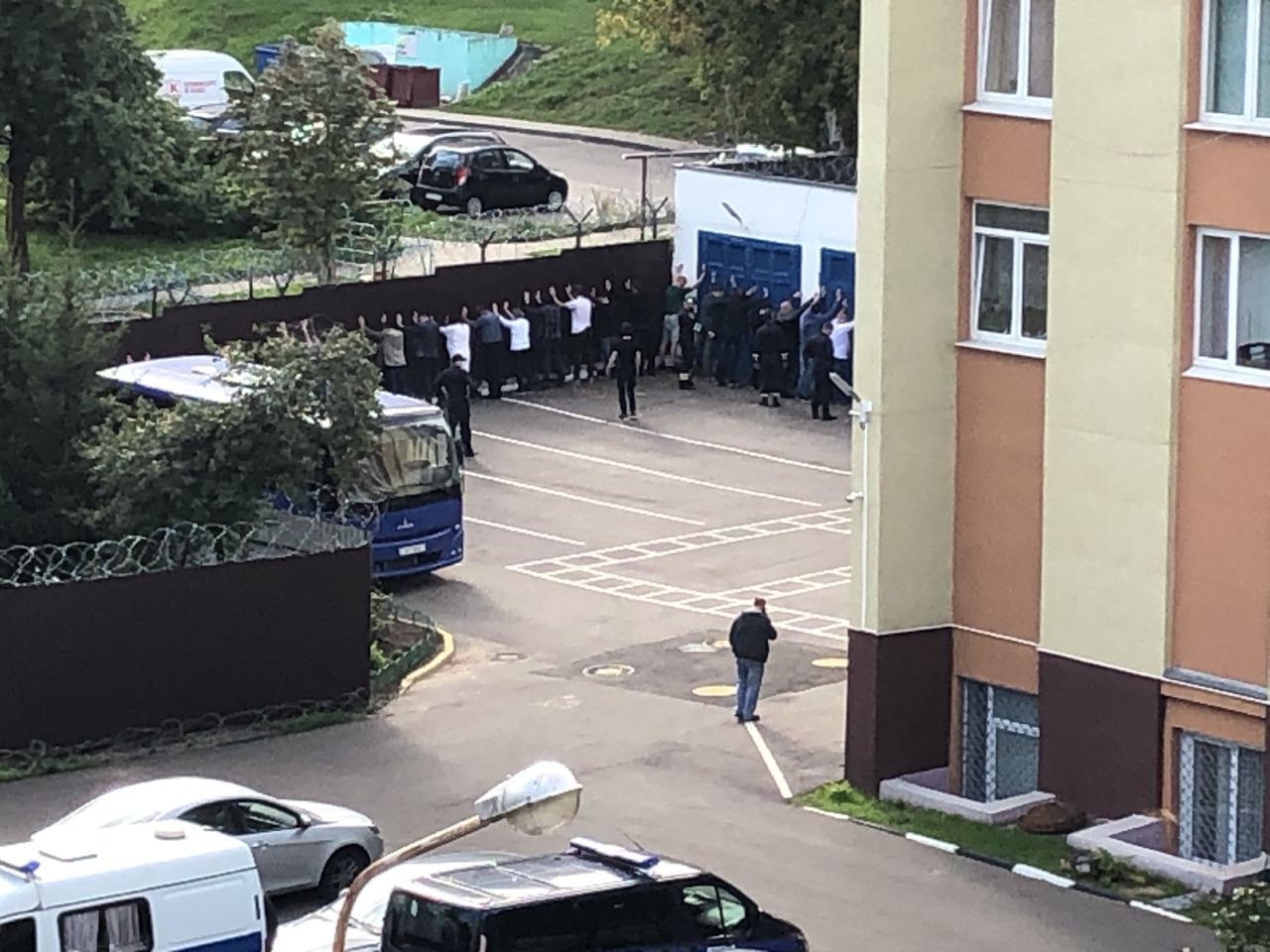
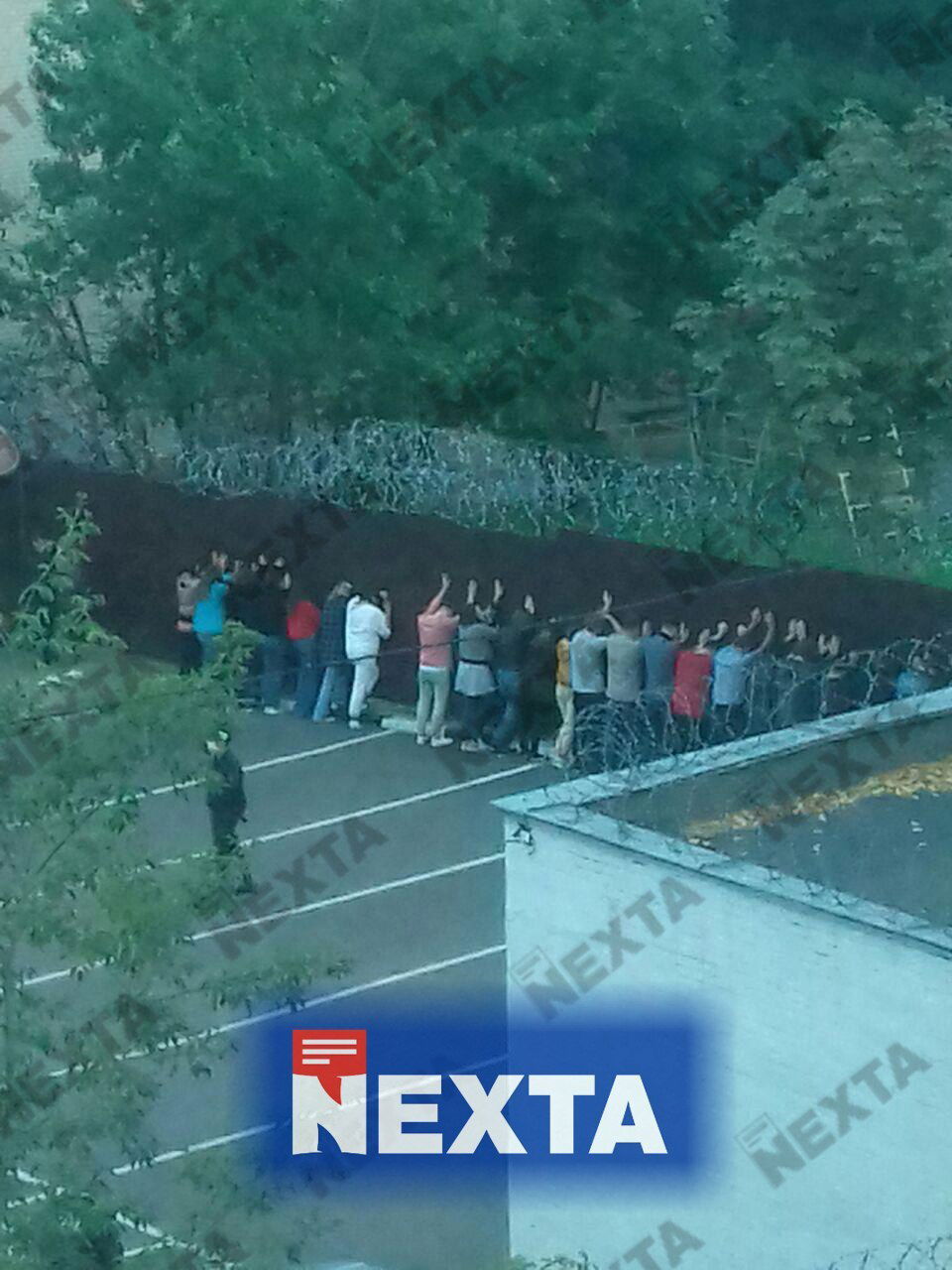
After that the arrested were moved to the inner courtyard of the district police department and made to stand with their hands behind their backs, bent low over barbed wire. It was unrolled along the ground so that any blow could throw a person onto the spikes. And they beat you for the slightest movement.
This is what that inner courtyard and that fence look like.
You stand at the fence in an awkward position, and in front of you on the ground is barbed wire. If you start to fall, you fall face first into it. We were afraid to move. If you tried to shift a numb leg, you got hit with a baton. Thank God, none of us fell.
One of the officers, a huge man, wore a helmet and a mask, so it was impossible to identify him. He shouted at people to lower their heads even more and hit every one of them. I watched him coming and tried to keep my head as low as I could. I hoped he wouldn't touch me, but no, he hit me anyway.
So I told him that I'm an Israeli citizen and demanded that the embassy be informed about me. He shouted: “Oh, so you're an Israeli citizen!” and hit me in the stomach with his baton. If I had kept quiet, I wouldn't have taken that blow. Then he turned to his colleagues and said: “Look, we've got an Israeli citizen here! They come here to wreck our country!”
One of the victims believes it was Colonel Sergei Kalinnik, chief of the Sovetsky district police department.
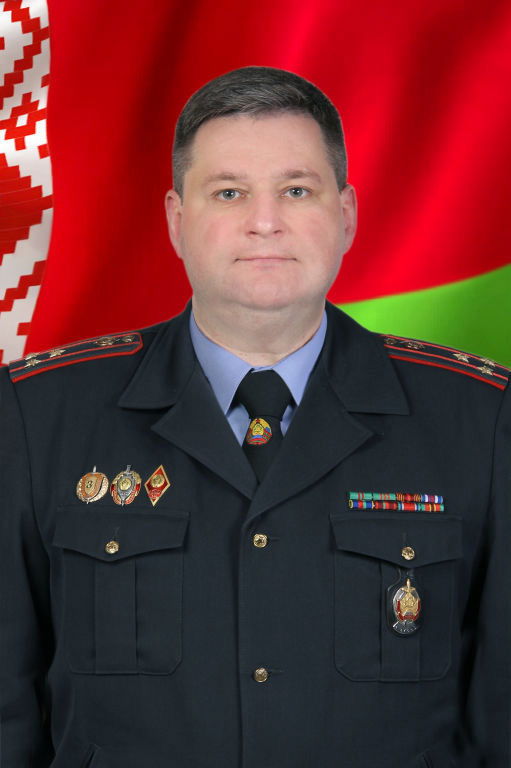
In the courtyard of the police department we were told: “You are at a restricted facility. If anything happens, we shoot to kill.”
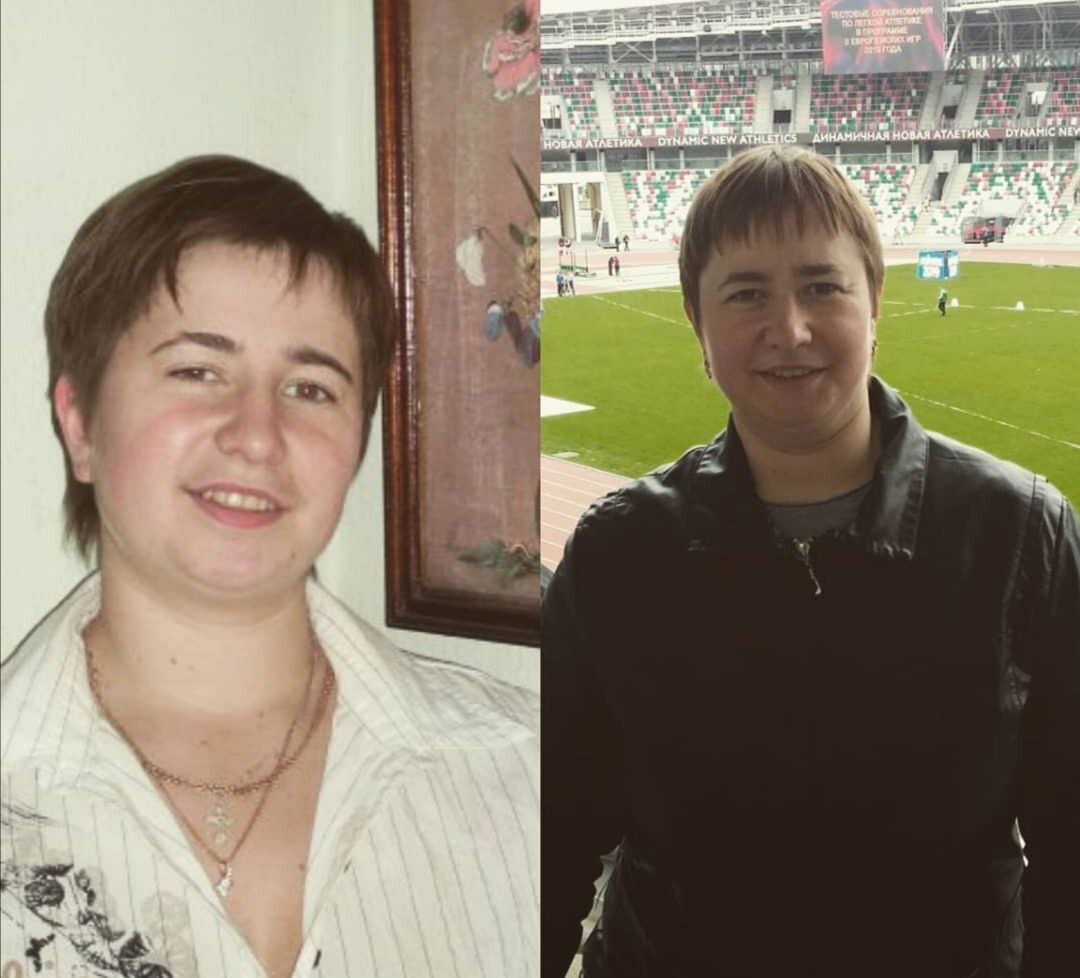
The victims were also able to identify Major Marina Safonova of the Sovetsky district police department. She took part in the torture in the inner courtyard of the Sovetsky district police department. She called out to the detainees in a hoarse, squeaky voice that made the guys laugh even in that situation.
We stood like that until 4 a.m. About once every two hours they gave us one bottle of water for everyone. So I couldn't drink my fill, because then someone else wouldn't get enough. I skipped my turn: first, so there would be more for the others, and second, so I wouldn't have to go to the toilet.
When the arrested were taken to the toilet under escort, a good cop, bad cop game began.
The one who takes you to the toilet starts talking to you politely, asking who to call to report your detention. As if he's the good one and ready to help. I asked the escort: “Please call the embassy.” He answered: “Of course, we're required to by law.” I was so touched that I told him: “I'll put a note in the Western Wall for you and your family.” But he didn't call anyone; it was just a game. I realized I was starting to develop “Stockholm syndrome” toward him, and I pushed those thoughts away.
From the courtyard we could hear explosions and gunfire near the Riga supermarket nearby, one of the centers of the protests on the night of August 10–11. We heard blasts and bursts of fire from there.
My uncle, a major, worked at the Sovetsky district police department 20 years ago, and his cousin was its chief. I told an officer: look, these are my relatives. He answered: "That was the Soviet Union, those were real times." Buddy, you were born in the '90s, you have no idea what the Soviet Union was. That's how brainwashed they are.
Then they took me aside and shone a flashlight on some printed arrest report. "What am I signing, can you tell me?" "That you resisted police officers when they tried to establish your identity." "I'm not signing that." He cursed me out and sent me back to the line.
Before dawn the temperature dropped to 10°C (50°F), but the arrested were still standing in the courtyard.
I was wearing only a T-shirt and knee-length denim shorts. The temperature had dropped, and I was terribly cold. Then they allowed us to sit down on the asphalt, hands behind our heads. But when you sit on cold asphalt at 10°C, you get even colder.
I'm a man, I've been through a lot in life, I can handle situations like this. But standing with us was a 51-year-old woman, Natalia, and she did everything we did… I don't know how she endured it…
We waited for dawn like the coming of the Messiah. We were all terribly cold.
In the courtyard with us was a man with an intellectual disability, officially Group II disabled, who behaved “like a six-year-old child.”
When he was ordered to raise his hands, he smiled and said: “I won't, I'm tired, I can't stand like this anymore.” For that they beat him with batons and punished him even more than us. Everyone around understood that he wasn't well and that this was why he behaved this way. Why the police didn't understand it is a mystery to me.
Then the sun came out and started to warm us. That was such a joy! We were allowed to sit on the asphalt again, even to lean on our hands, but we were ordered to look only straight ahead. We relaxed. But this guy Artyom… He kept turning around and smiling, as if he had stumbled into some kind of adventure. And for his disobedience they punished all of us. They made us stand up again, bent over, and kept us like that for an hour. Collective punishment because a disabled man disobeyed them.
From the courtyard I could hear people being tortured inside the police department building: people arrested that same night near the Riga supermarket, where they had tried to build barricades.
I heard horrible screams and blows, the dull thuds of a baton on a body. The OMON took all their rage out on those people, and that is probably what saved us from crueler torture.
Based on the investigation, the chief of the Sovetsky district police department Sergei Kalinnik, his deputy Timur Kessel, and the department's inspectors Marina Safonova and Svetlana Nikitina are suspected of crimes against humanity (torture, beatings, threats to life and health, deprivation of sleep, food and water, and violating sanitary rules during the pandemic).
