Police van to Zhodino
Around 11 a.m. they started taking the arrested to the prison in Zhodino, a town in the Minsk region. They took us in two police vans (avtozaks).
The OMON riot police officers in charge of loading picked out for one van everyone who stood out in any way: people wearing Belarusian national symbols, guys with long hair or tattoos. Rumor had it that people in that van were tortured worse. But even what I went through during the transfer reminds me most of all of the Gestapo.
Before being loaded into the van, each detainee had to say his first and last name on camera.
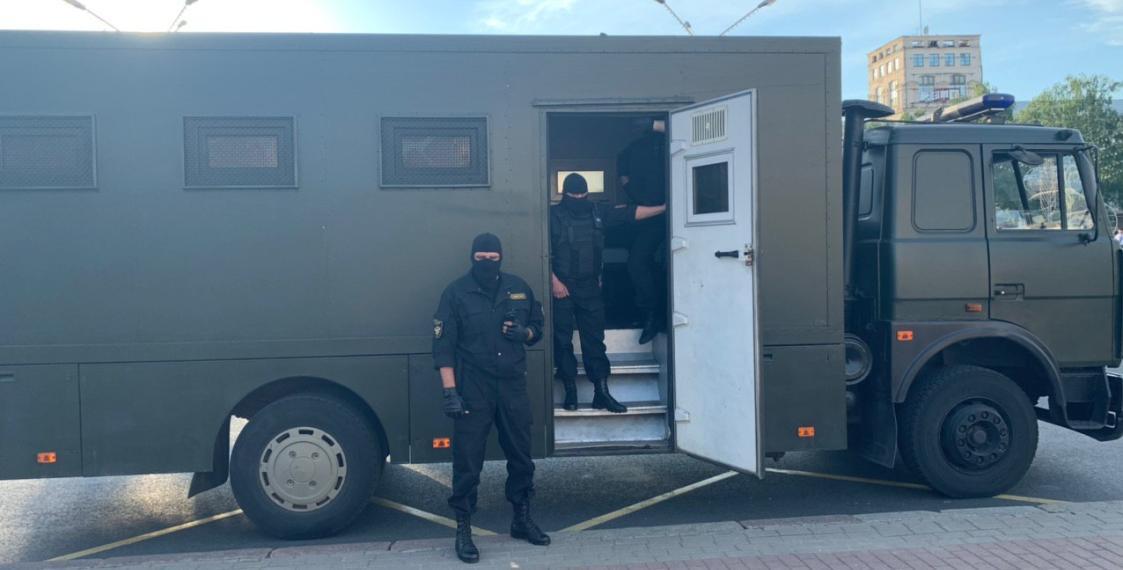
People in the van lay on top of one another. A guy underneath me lost consciousness. It went like this: a person kneels, hands behind his back, back bent, head pressed to the floor. I kneel behind him and lean my weight on him.
The stronger men had their hands tied with plastic zip ties, so tight that their hands turned blue. Some managed to stretch them, but if the “OMON officers” noticed, the person got a huge number of blows to the back.
The transfer to Zhodino was the hardest part of my entire arrest. In front of me lay a guy, very strong. Later he was in my cell. He was a former soldier of the presidential company, the one that performs at holiday events and greets foreign guests as an honor guard. Apparently he ran out of air, and he lost consciousness. They turned him over, slapped his cheeks, poured water on him, and he came to. But now he was on top of me in that pile of bodies.
One guy simply soiled himself. I think he was right in front of me. So we are riding in that stuffy van, people lying on top of each other, knees aching, the van bouncing over potholes… and now this smell on top of it. They also played “karaoke” with us in the van. They “ordered” a song, and we had to sing it. They “ordered” Tsoi's “Changes” or songs by Stas Mikhailov. I didn't sing, but the younger guys tried to perform something.
Anyone who complained was beaten again. And if an “OMON officer” couldn't reach the person he wanted to hit with his baton, he stood on the backs of other prisoners to reach him.
He put one foot on my back and the other on someone else. And he didn't just stand there, that wouldn't have hurt so much. He deliberately ground his boot into my back, twisting it to make it hurt more. I understood it was better not to make a sound and to hold out for another hour or so. But we listened to them and remembered. Sometimes they made mistakes and called each other by their last names. From the van to Zhodino I remembered one last name: Shabunya.
Later the victims identified one of them. It was OMON sergeant Pavel Shabunya.
Remember how in “Game of Thrones” Arya Stark kept repeating to herself the names of the people she meant to kill? I'm not planning to kill anyone, of course, but I picked up the method. I kept repeating to myself the names I had heard. Some of the other guys did the same. I think it's very important.
On the way they started trying to scare us: Zhodino was the most terrible prison in the world. They said: “Now they'll throw you into the cells with the criminals, and they'll make you their bitches.” “You won't get out of there, say goodbye to your life.” “What we're doing to you is nothing. There in Zhodino you'll really s*** yourselves…”
The young guys next to me were crying with fear… A 20-year-old guy asked me in a whisper how to behave during the torture so that it wouldn't hurt. I told him: “The main thing is don't be afraid, because when you're afraid it hurts even more. Try to switch off from all of it.”
At the entrance to the Zhodino pre-trial detention center (SIZO) there was a line of police vans that took an hour and a half. The guards finally let the people in the van sit on the floor, but it hurt me to sit in any position because I had been badly beaten. The OMON officers had been psychologically “pumped up,” and this is how they explained their brutality.
We sat more comfortably, and the talking began. The “OMON officers” started telling us how bad we were and how good Lukashenko was. They said we were each being paid $150. I look him in the eyes and realize: he believes it!
Then they started explaining why they were so brutal. They told us tall tales about more than 100 “OMON officers” already lying in hospitals with fractured skulls, and said they were taking revenge for them. I think they had been told this on purpose, to make them angrier. There is no confirmation of these claims.
I started steering the conversation toward the Israeli army, hoping to interest them so they would be less vicious. I asked them everyday questions: what their salaries were, how much they needed to live on. I tried to draw their attention away from the others, the young guys, who were asking things that could make the guards angry.
We hadn't eaten for more than a day, and we sat in front of officers from the 4th company of the OMON of the Minsk city police department (GUVD), who were eating catered food and discussing what tasted better.
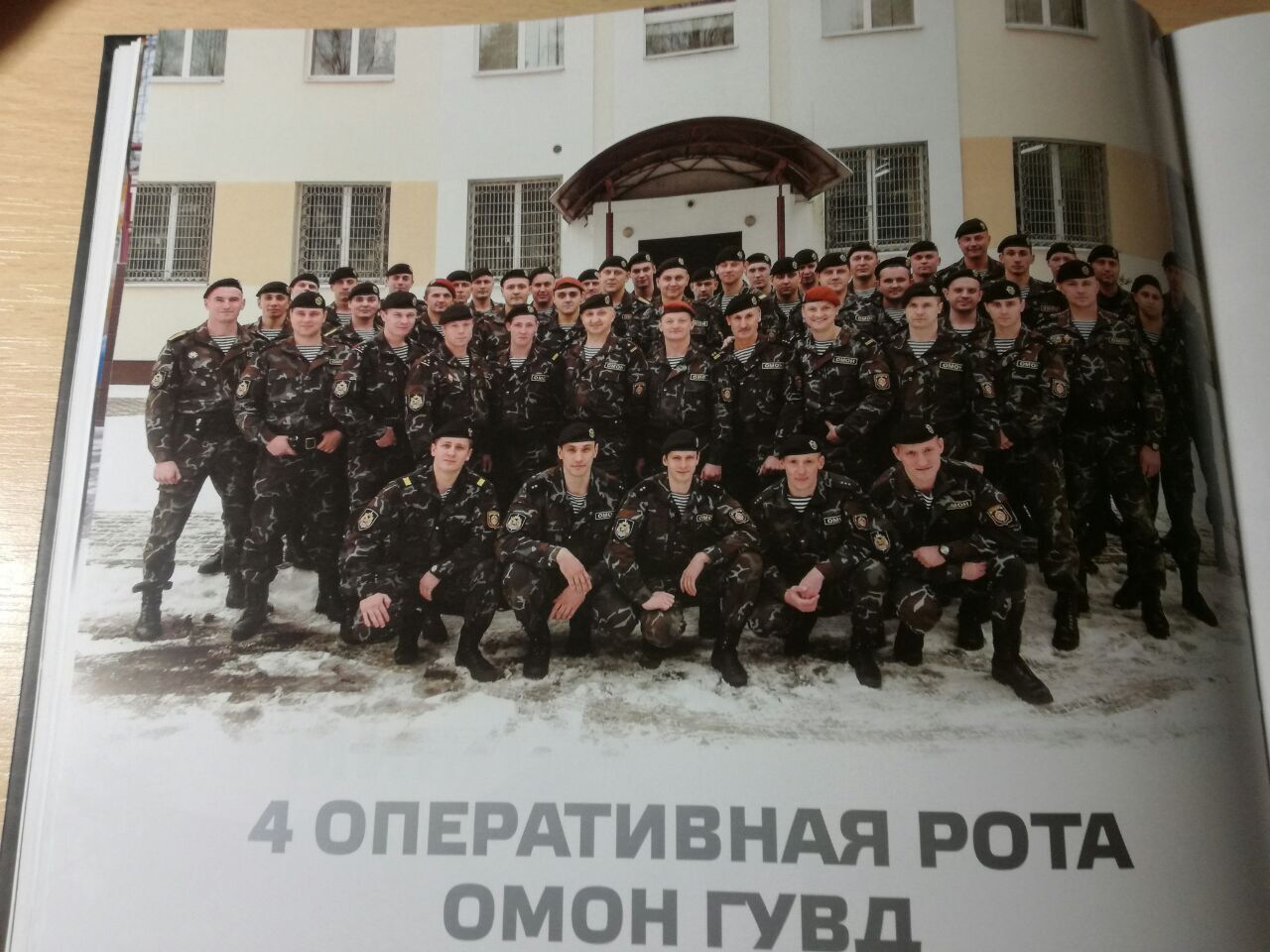
The investigation established that the 4th operational company of the GUVD OMON took part in transferring the detainees from the Sovetsky district police department to Zhodino prison. OMON sergeant Pavel Shabunya, Artyom Dubrovsky and Pavel Opechenok were identified.
They are accused of crimes against humanity, torture, beatings and threats of violence.
Police Major Denis Mikhailovich Gushcha, commander of the 12th platoon of the 4th operational company, also bears responsibility for the actions of the police officers under his command.
