Zhodino prison
Only on arrival at the Zhodino pre-trial detention center (SIZO) could the arrested finally breathe out. The staff of this “zone,” a prison for criminal offenders, behaved far more decently than the OMON riot police.
The Zhodino staff didn't beat us at all; I didn't take a single blow. We ran down a corridor and found ourselves in an inner yard covered with bars on top. A guard stood up above. There, for the first time in 24 hours, I heard a human voice, with no shouting or swearing. He asked us: “Guys, is everyone OK, any complaints? I'll bring a bucket now if anyone needs the toilet. Hang on for half an hour and we'll put you in cells, it'll be calmer for you there.” Everyone just breathed out.
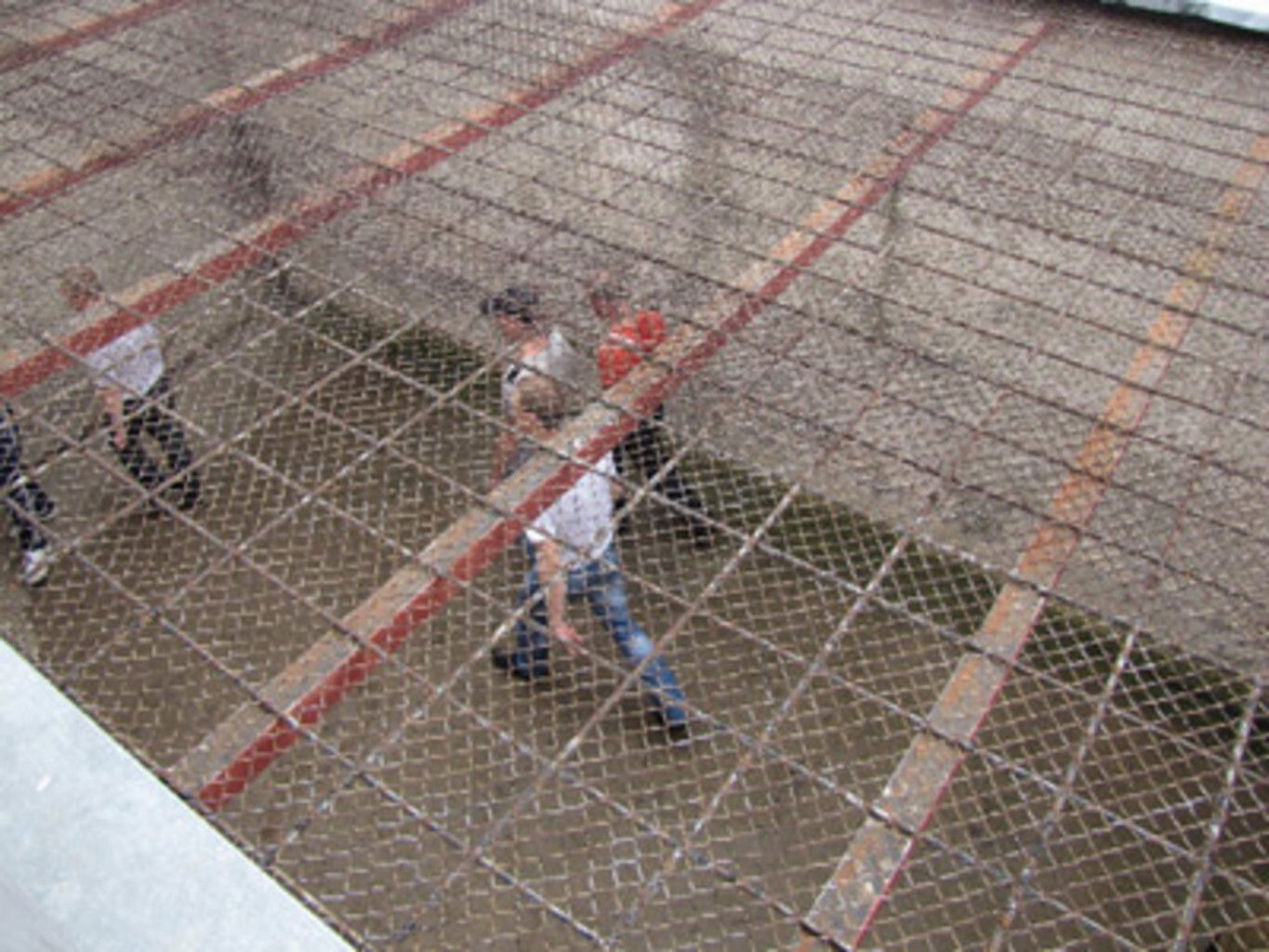 Exercise yard in Zhodino prison
I was surprised that the prison doctor didn't even ask how we were feeling. He only gave aspirin to the guys who had bruises on their faces.
My cell, built for 8 people, held 18 men. All of us were protesters. The criminal inmates had been moved out, apparently in a hurry: the detainees found a hiding place in the cell with razor blades and a shank in it. To stay out of trouble, they flushed them down the toilet right away.
The cell was unsanitary and dirty. A guard brought us a rag, and we washed the floor so we could sleep on it.
During the day the temperature in the cell rose above 30°C (86°F). The prisoners agreed to keep up hygiene and rinsed themselves with water several times a day. There were four bunk beds for 18 people. So that everyone could sleep at night, they washed the floor and spread blankets on it.
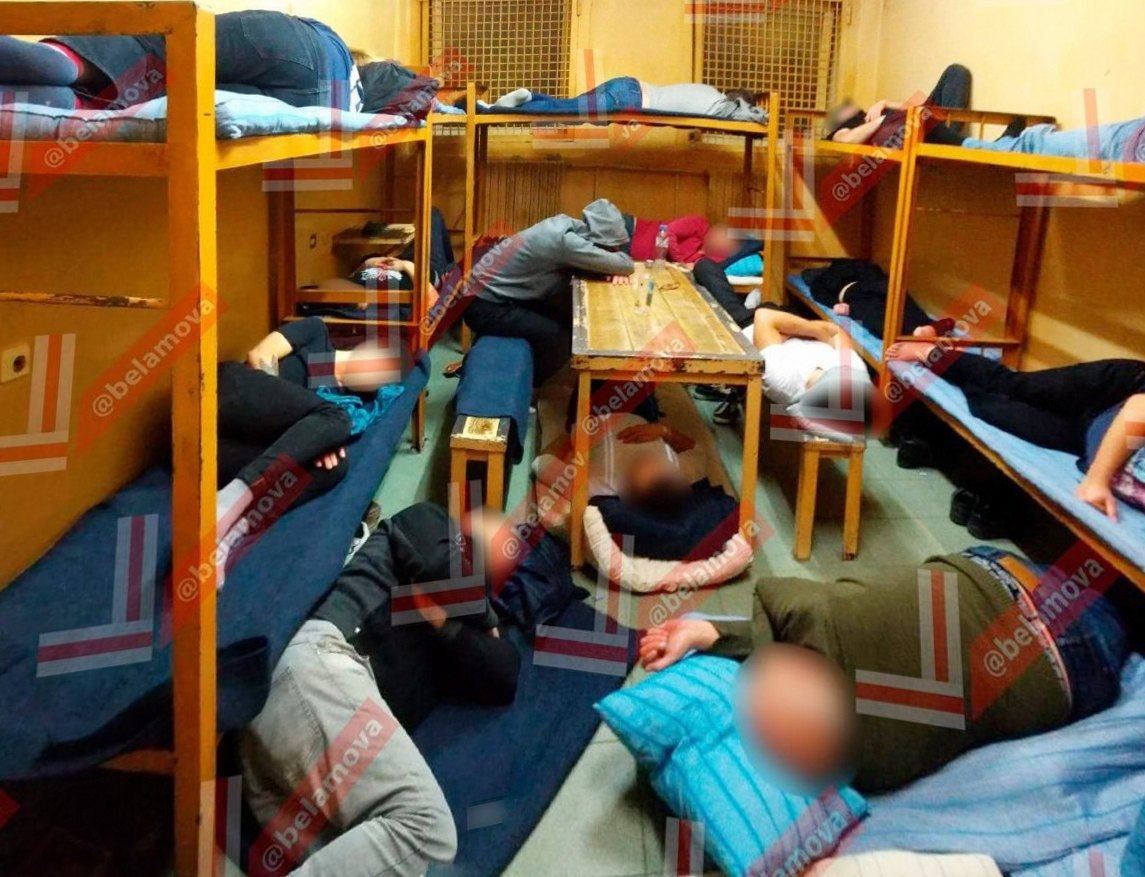 | 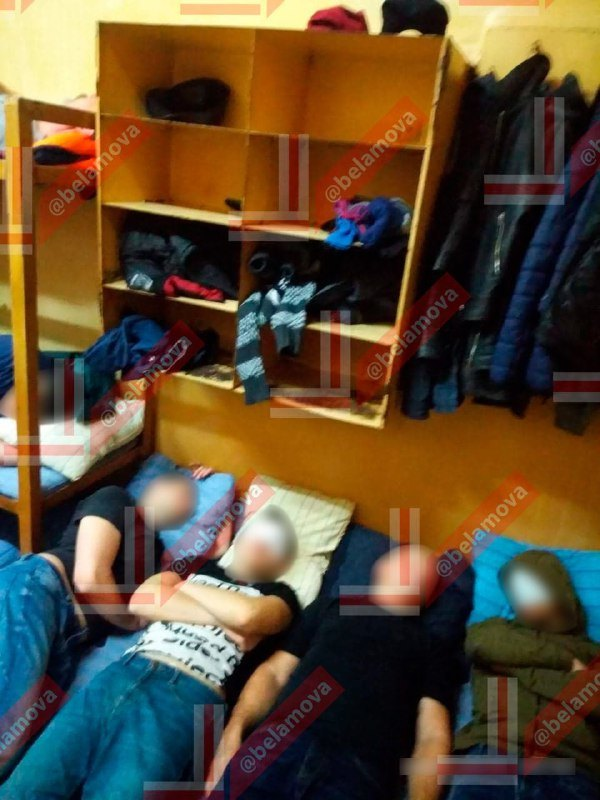 | 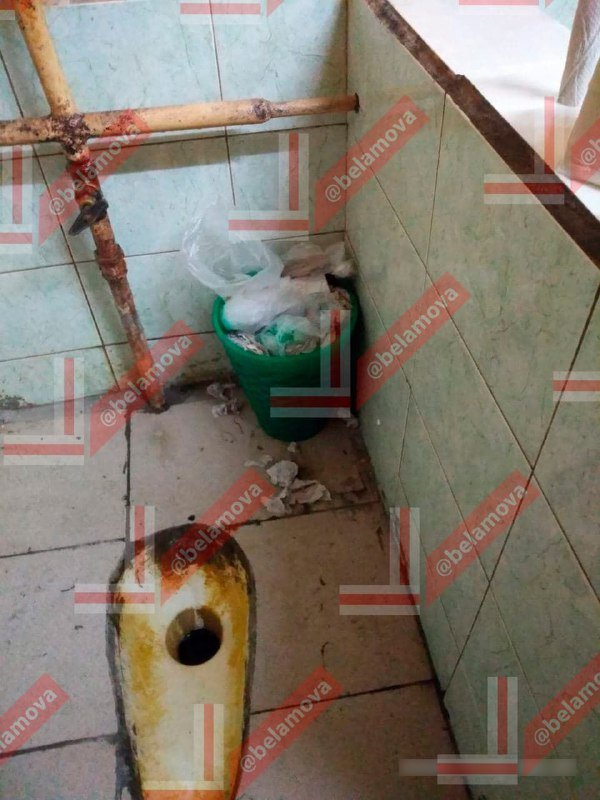 |
We had incredible solidarity. The oldest in our cell were me and another man, 35-year-old Andrey. We tried to help the guys organize everything. On the very first evening we drew lots for who would sleep where. Eight got bunks, the rest the floor. The next night we swapped. I was the shortest, 1.70 m (5 ft 7 in), so right away I volunteered to sleep on the table every night, to leave more room for the others.
That same disabled guy, Artyom, ended up in our cell. We washed him every day so he wouldn't overheat: the heat made him scratch himself until he bled. We talked to him all the time so he would feel he was one of us. I think he had never had so many friends in his whole life…
We ate for the first time on the morning of August 12. Artyom ate a lot; maybe that's how his illness affects him. To make sure he had enough, we kept telling the guards there was one more of us than there really was, and they brought an extra portion.
We made checkers and backgammon out of bread. We talked a lot, about history, about philosophy. I told the guys army stories… There were a lot of very smart people there. In the cell I met fine Belarusians, people of different professions.
I also got to know a Polish journalist named Kacper. He's a polyglot: he knows Russian perfectly and several other languages. We talked about philosophy, culture… At the Frunzensky district police department in Minsk he had been beaten especially hard just for being Polish. “You Poles came here to wreck our country. You're all gays in Europe, f*ggots. Why are you pushing in here?” they told him.
We asked a guard for a pencil. It wasn't allowed, but they gave us one anyway, and paper. Kacper and I wrote everything down in detail so we wouldn't forget. We found some scraps of newspaper behind the radiator, at least something to read. I filled in my gaps in Belarusian history between 1998 and 2020. We discussed what Western countries should do to help Belarus. Sometimes we sang protest songs.
Later, while we were in the Zhodino SIZO, two men with briefcases came to the cell for Kacper. They didn't say where they were from, but it was obvious they were from the security services. They took him away for a talk. They told him that Belarusians actually love Poles, and tried to persuade him not to tell anyone what he had seen. But he answered: “No, I'm going to tell everything!” and they took him back.
The worst torture had been endured by those of my cellmates who spent the night at the Frunzensky district police department.
I had been complaining that we had to stand bent over with our asses in the air, but they had lain on the floor while being kicked and forced to shout “Lukashenko is the best president.”
On August 13, they started taking the prisoners to court. The judges didn't listen to anyone; they just stamped out sentences. The arrested got standard terms of administrative arrest, from 5 to 15 days. One detainee got a reprimand from the judge for speaking to her in Belarusian...
The hearings were held literally around the corner. Turn right and you get 10 days, turn left and you get 5. Only the Pole and I weren't sentenced.
Meanwhile the 72 hours for which the law allows a person to be held under arrest were running out.
