Release from Zhodino
On August 13, they started taking the prisoners to court. The judges didn't listen to anyone; they just stamped out sentences. The arrested got standard terms of administrative arrest, from 5 to 15 days. But nobody ever came for me. Meanwhile the 72 hours for which the law allows a person to be held under arrest were running out.
I called one of the jailers over and said: “Listen, what's going on with me? Two more hours and you have to let me go, by law.” He said: “There's a strange story with you. They've lost your documents.” And then I understood I'd be out soon…
Now they want to pretend I was never there at all! Apparently they thought I had dual citizenship, Israeli and Belarusian. In that case the Belarusian authorities could say: “We know nothing, this is a Belarusian citizen,” and do whatever they wanted with me. But I have only Israeli citizenship: I gave up my Belarusian citizenship back in 2001. At one time I regretted it, but now it saved me.
When it became clear that I was being released, my cellmates wrote me detailed lists with their last names and their relatives' phone numbers. Through the ventilation you could talk to prisoners in other cells, and they passed on their details too.
I agreed with my cellmates that we would find each other on Instagram after we got out.
We came up with unique hashtags so people could find us on Instagram later. #PN27PN, in Latin letters, is the hashtag of the guys who were with me in the police van (avtozak). The hashtag of our cell in Zhodino is #жодино26ожидайте (“Zhodino 26, please wait”). Our cell number was 26. And “please wait” is the funniest phrase we heard there whenever we asked for anything.
When my release came, I was told, as I had suspected, that my passport had been lost. So the Belarusian authorities first kidnapped an Israeli and then stole his passport.
Before the release I had to spend two hours searching for my things among the belongings of other detainees.
Six rooms, with mountains of belongings in them. Phones, shoelaces, shoes, piles of money, credit cards… Surprisingly, I found my bank cards and my money. Lots of banknotes in different currencies.
In a prison corridor I noticed a young woman who had been crying, standing facing the wall with her hands behind her back. The night before, women had been put into one of the cells next to ours. I swapped places with several guys and got to her. She turned out to be a math lecturer at Belarusian State University and told me about the conditions at Okrestina. Here is her story on august2020.info. She is now safe in Europe, and we write to each other from time to time. We'll definitely meet someday.
I looked at the prison staff: their eyes were red, they were so worn out. The whole time I was in the cell they kept running around, looking for someone. In fact, they are the ones serving time there, not us. And as we were leaving, an officer said to one of us: "Guys, don't give up, we're with you."
In all, I spent 78 hours in custody. I was released together with the Polish journalist.
They lead us out through the prison gates. Kacper is next to me. I took him by the shoulder and said: “Kacper, freedom!” And I see the Polish ambassador waiting for him. But no Israeli one!
I was surprised. In the cell I kept telling the guys: I'm from Israel, my people will tear anyone apart for me. I told them about Naama Issachar, and they were amazed at how everyone had stood up for one girl. But nobody from the Israeli embassy came to meet me.
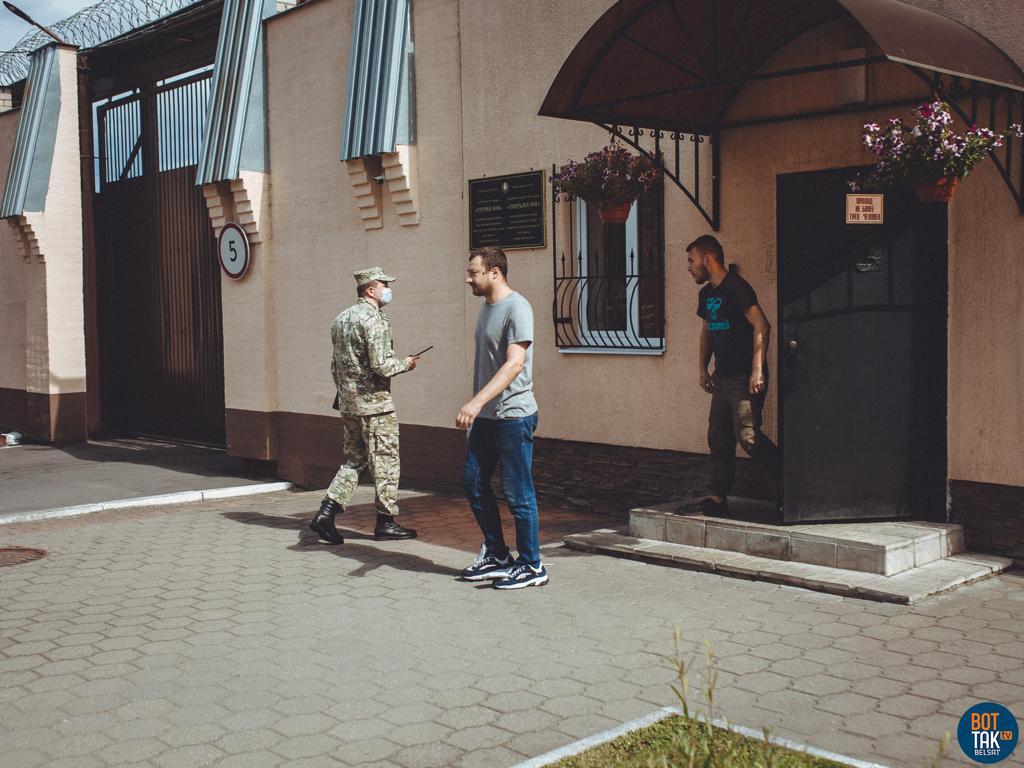 Checkpoint at the entrance to Zhodino prison
About 500 people were waiting for us outside the gates. I walk out, and everyone reaches toward me with their phones. On every screen is a photo of their missing loved one.
Belarusian security forces did not tell detainees' relatives where their loved ones were and did not post any lists, and many Belarusians still don't know where their family members are. Only human rights activists collect this information, and the authorities are reluctant to cooperate with them.
A cellmate who had been released earlier came to meet me. First we went to see the mother of the guy with the disability. We reassured her that he was all right and that we had looked after him. We had even washed him: the cell is hot and stuffy, and that makes him tear at his skin.
Almost all of us from the cell got together later at a café. Maxim Znak was sitting at the next table. We said hello. He said back then: "Every decent person should spend time in Zhodino." Well, now he is in Zhodino. It's great that people like him are the celebrities, and not some "Singing Underpants." By then I had started giving interviews, and people recognized me on the street too and shook my hand.
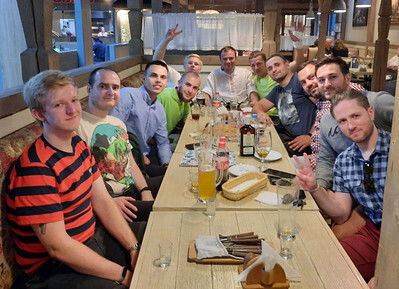 Cellmates' reunion at the Vasilki café
